


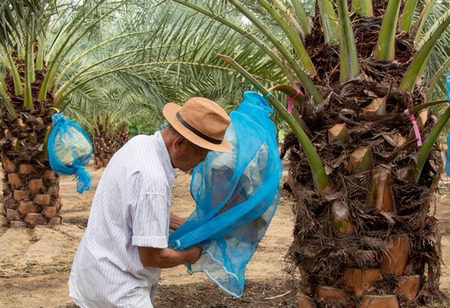
Malaysia holds a uniquely advantageous position as a leading global exporter of palm oil, maintaining its provision of edible oils to nations experiencing challenges related to escalating food prices and interruptions in fertilizer supply caused by the shutdown of the Strait of Hormuz.
Julian McGill, who serves as the managing director of Glenauk Economics, a UK-based economic advisory firm, pointed out that the resilience of palm oil production amidst fertilizer supply disruptions can be attributed to the ongoing conflict in West Asia.
Also Read: Dubai Chambers, Indian Ambassador Talk to Bolster Trade Ties
He stated that oil palm, which is considered the most significant crop in Malaysia, encompasses approximately 75 percent of the total planted area in the country and possesses numerous attributes that enhance the sector's competitive advantage.
He articulated that food crops, including fruits and vegetables, rely significantly on nitrogen-based fertilizers, with the Gulf regions contributing between one quarter and one third of the worldwide supply.
McGill stated that oil palm cultivation relies heavily on the use of fertilizers, particularly those rich in potash as opposed to nitrogen-based alternatives. He stated that numerous large producers often choose to make advance purchases of fertilizers, ensuring that 60-70 percent of the necessary quantity is already guaranteed.
Also Read: Microsoft to Invest $10 Billion in Japan for AI, Cyber Defense
"With disruption (from the conflict), prices have shot up. The secondary effect is that countries such as China and Russia are restricting their exports,” he said on Bernama TV’s Bernama World programme entitled ‘The Impact of the West Asia Conflict on Global Agriculture’ hosted by Melissa Ong.
"We have to see whether the suppliers will honour the contracts with the volatility of prices, but in effect, they have already pre-bought,” he said.
McGill asserted that any reduction in fertiliser usage at present would have a delayed effect on production, requiring as long as two years to manifest fully. McGill stated that in light of the supply disruption and the increased level of tension and uncertainty surrounding agriculture and food production on a global scale, Malaysia has the opportunity to capitalize on its advantageous position to significantly increase its export earnings through the export of large quantities of edible oil.
"Palm oil can continue reasonably well, even if this (conflict) is causing big problems for the planning and the decision-making. We are not going to see an immediate collapse in palm oil production,” he says.
Also Read: KT Appoints Park Yoon-young New CEO, Eyes AI-driven Reshuffle
Furthermore, McGill emphasized the significance of the commodity as a viable alternative to diesel during periods of crisis and escalating fuel costs, drawing a comparison to Indonesia's approach.
Referring to the effects of the conflict in West Asia on agricultural supply chains for food and fertilizers worldwide, McGill noted that the full repercussions remain uncertain. However, the present circumstances are characterized by a high level of tension, leading individuals to adopt a cautious and observant approach. Additionally, McGill observed that the agricultural sector operates at a slower pace compared to other sectors.