


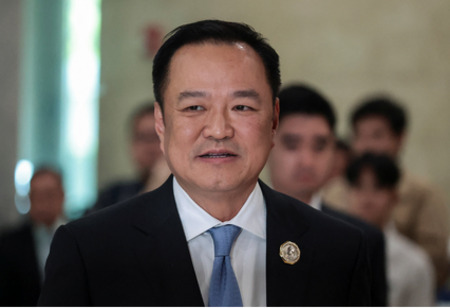
Thailand is slated to implement extensive economic and administrative overhauls, with a focus on advancing growth and reducing operational expenses with the integration of technological solutions, as outlined in an upcoming policy address by the prime minister.
The preliminary document highlights backing for small and medium-sized businesses, streamlined financial access, and investments in artificial intelligence, semiconductors, and renewable energy.
Also Read: Prabowo Meets Emperor Naruhito, Bolstering Indonesia-Japan Ties
The statement further emphasized the urgency of expediting the passage of a comprehensive law within the current year aimed at eliminating obsolete regulations that have hindered business activities and economic expansion. It also highlighted the necessity of implementing a "super license" within a 180-day timeframe to modernize government services and streamline administrative processes.
The government is also considering the utilization of big data and artificial intelligence in the agricultural industry with the aim of synchronizing supply and demand, as well as increasing farmers' income and food exports. The policy statement also committed to implementing educational changes focused on internet accessibility, job skills, and training for the AI age, in addition to broader welfare initiatives such as healthcare reform, updates to social security systems, and increased support for an aging population.
The government has also pledged to improve domestic security, strengthen restrictions on drugs, and address transnational crime by evaluating regulations on free-visa entry.
Tourism, a crucial economic stimulus, will be enhanced by offering more flexible visa policies in order to entice travelers to stay for longer periods. The number of foreign visitors declined by 2.3 percent compared to the previous year, totaling 9.17 million arrivals from January 1 to March 29. The prominent business organization in Thailand recently announced their projection of approximately 32 million foreign visitors for the current year, which falls significantly short of the pre-pandemic peak of nearly 40 million.
Also Read: FM Cho Discusses Strait of Hormuz With Trump Official
The organization reduced its predicted GDP growth rate for 2026 to a range of 1.2 percent to 1.6 percent last week, down from the previous range of 1.6 percent to 2.0 percent. In the preceding year, the economy of Thailand experienced an expansion of 2.4 percent.
Additionally, the prime minister criticized oil traders for engaging in "excessive profiteering," attributing the rising prices to shortages caused by fuel hoarding and smuggling. Large and medium-sized oil traders have been discovered engaging in hoarding and profiteering activities both on land and at sea, according to Anutin. Deliberate delays in seaborne shipments have been detected, causing fuel to arrive later than scheduled to take advantage of potential retail price hikes, as mentioned by Anutin.
Also Read: WPP Names Kyoko Matsushita as APAC CEO of WPP Creative
The prime minister reported that additional deliveries had been redirected for storage and were believed to be intended for nearby nations. According to Thai Minister of Justice Rutthaphon Naowarat, over 57 million liters of fuel were unaccounted for during maritime transit in southern Thailand. Anutin informed that the Thai Department of Special Investigation is handling the issue as a unique case and is currently conducting investigations.
The accusations of stockpiling have emerged amidst widespread public concern over consecutive increases in fuel prices. Recent fuel price hikes have resulted in unprecedented highs, with unleaded gasoline priced at 57.51 baht per liter and diesel at 47.74 baht. The conflict in the Middle East, stemming from US and Israeli attacks on Iran in February, has led to disturbances in oil and gas distribution, resulting in price fluctuations throughout a significant portion of Southeast Asia.