


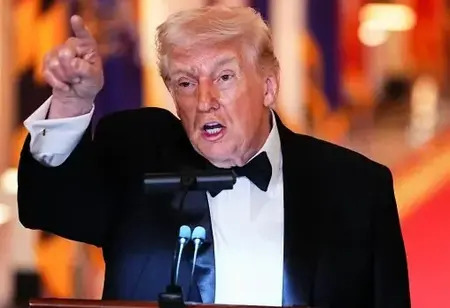
US President Donald Trump criticized Taiwan’s semiconductor industry after the US Supreme Court ruled that his tariffs exceeded presidential authority under the 1977 International Emergency Economic Powers Act (IEEPA).
Trump accused Taiwan of "stealing" US chip business and pointed to Taiwanese companies opening factories in the US to avoid tariffs.
The 6-3 court decision invalidated many of Trump's tariffs, which were initially imposed as temporary measures.
Taiwan’s exports to the US, especially in semiconductors, grew recently, with December shipments reaching nearly US$24.7 billion, surpassing China’s US$21.1 billion. The ruling may impact Taiwan’s export growth and influence ongoing US-China trade negotiations.
The Trump administration describes the ruling as technical, limiting the use of IEEPA for revenue generation but not rejecting tariffs outright. Moving forward, the administration plans to use other legal tools like Section 232 and Section 301, which focus on national security and addressing unfair trade practices.
Section 232 sets a 25 percent tariff on certain semiconductors, including Nvidia 200 and AMD MI325X, while offering tariff exemptions for certain Taiwanese investments in US semiconductor production.
Also Read: TSMC Registers Sharp Rise in Net Profits for the First Quarter
Despite efforts to onshore semiconductor production in the US, TSMC's Arizona plant faces high costs, impacting profits. The US plans to move 40 percent of Taiwan’s supply chain to America, although Taiwan’s production remains significantly larger.
Also Read: AMD Predicts Profits Could be Impacted by US' Licensing Control Requirement
The ruling by the US Supreme Court marks a significant turning point in the trade war between the US and China, with Taiwan caught in the crossfire. Although Taiwan's semiconductor exports to the US have surged, particularly in light of the ongoing supply chain disruptions, the court’s decision could make the situation more complex for both US and Taiwanese companies.
Also Read: Nasdaq Futures, Nvidia Slide After New US Curbs on Chip Exports to China
If the US tightens restrictions on Taiwanese chips, it may affect global markets, especially given Taiwan's dominant role in chip manufacturing. The US has long relied on Taiwanese technology giants like TSMC for advanced semiconductors, making any disruption a potential risk to global tech supply chains.