


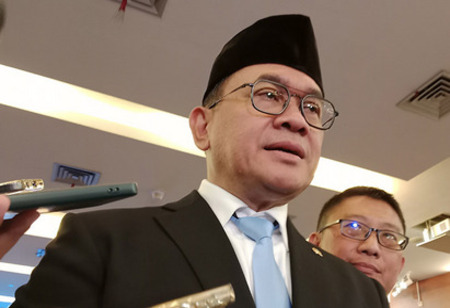
Trade Minister Budi Santoso expressed concern that the increasing tensions between the US and Iran could have repercussions on various Indonesian industries, particularly in the areas of energy and logistical expenses.
Santoso highlighted that the most significant repercussions would be felt in the event of a disruption in global oil distribution, potentially resulting in the closure of the Strait of Hormuz.
Also Read: Saudi Aramco Pauses Ras Tanura Refinery After Drone Strike
He emphasized that the energy industry would be the first to experience the consequences. He further mentioned that the manufacturing industry is particularly susceptible to risks.
Production processes in Indonesia that rely heavily on energy could experience increased operational expenses.
"Fuel prices will certainly rise if that potential closure of the Strait of Hormuz actually happens. Hopefully, it will not happen," Santoso says.
He elaborated on the fact that escalating production expenses could lead to diminished business profit margins or result in higher prices for consumer goods, which in turn might diminish the competitiveness of Indonesian products in the global marketplace.
Moreover, the export industry will be confronted with dual challenges stemming from increased manufacturing expenses and a decline in global demand due to economic instability. He highlighted the significance of protecting internal trade to mitigate these risks.
"Our exports will also see rising costs. That means we and other countries will all be affected. Countries needing raw materials will feel the impact, and finished goods will also be affected," he said.
Also Read: Kioxia Appoints Yoshihiko Kawamura as CFO
The sustained growth of the economy has historically been bolstered by domestic consumption, serving as a safeguard against worldwide economic volatilities.
The government intends to optimize stimulus measures and foster partnerships with the private sector in order to uphold household purchasing power, thereby facilitating the continuation of domestic trade amidst mounting global challenges.
Additionally, the government intends to concentrate on bolstering the domestic market and expanding the range of export markets.
Furthermore, the speaker of Indonesia's parliament has expressed support for the government's endeavors to facilitate negotiations between the US and Iran following a series of retaliatory military actions that have heightened tensions and sparked concerns of a potential broader conflict in the region.
Ahmad Muzani, the Speaker of the People’s Consultative Assembly (MPR), emphasized Indonesia's obligation as outlined in the 1945 Constitution to uphold global peace and play a proactive role in mitigating conflicts in the Middle East.
He stated that any attempt at mediation should be conducted with precision, emphasizing that President Prabowo Subianto had taken into account strategic factors prior to indicating a willingness to facilitate dialogue between the opposing factions.
Also Read: Lee to Pay State Visits to Singapore, Philippines Next Week
Indonesia underscored the necessity for all involved parties to display constraint and give precedence to dialogue and diplomacy. It emphasized the significance of upholding sovereignty and territorial integrity, and settling conflicts through peaceful methods.
The ministry announced that the Indonesian government, acting on behalf of the president, had indicated a willingness to assist in negotiations aimed at restoring a peaceful security environment. If both parties agree, Prabowo is prepared to travel to Tehran for mediation.
The comments were made in response to the coordinated military action carried out by the US and Israel on the morning of Saturday, February 28th, aimed at key sites in Iran, notably in Tehran, leading to a significant escalation of tensions that have been brewing for some time.