


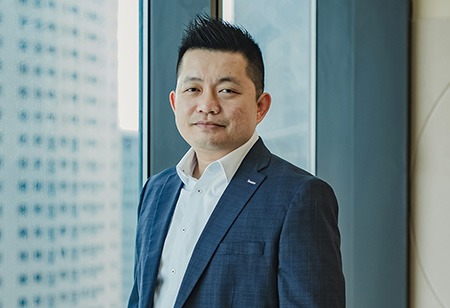
 As Southeast Asia’s digital economy continues to expand, fintech companies face growing pressure to scale efficiently while meeting the evolving needs of businesses and consumers. For Paydibs, success lies not only in driving innovation but also in building trust, operational resilience, and accessible payment solutions that empower businesses of all sizes, says Paydibs CEO, Tee Kean Kang.
With 17 years of experience across diverse industries, Tee Kean Kang is a business transformation and growth leader specializing in M&A, fintech strategy, digital payments, technology modernization, regulatory compliance, and business scaling. He currently leads Paydibs’ turnaround, driving innovation, strategic partnerships, merchant acquisition, and expansion across integrated payment and financial solutions.
In an exclusive interaction with CEO Insights Asia, Tee Kean shares his insights on fintech leadership, sustainable growth, merchant-centric innovation, regulatory adaptability, and the strategies required to build scalable solutions in Southeast Asia’s increasingly competitive payments landscape.
Read the complete article to know more about Paydibs CEO’s fintech leadership mindset.
Q1. As Southeast Asia’s digital economy expands rapidly, what leadership mindset is essential for building scalable fintech solutions in competitive markets?
A. A leadership mindset that balances innovation with practicality is essential as Southeast Asia’s digital economy continues to accelerate. Leaders today must focus on solving real operational pain points rather than introducing technology purely for the sake of innovation. We should recognise that the opportunity is no longer simply about developing new payment capabilities, but about delivering solutions that are practical, accessible, and merchant-centric, while also staying aligned with evolving regulatory expectations.
For Paydibs, this means strengthening payment connectivity, enabling faster settlements, and simplifying business operations, in particularly for SMEs that face resource and technical constraints. Ultimately, sustainable growth depends on building technology that businesses can trust, adopt with ease, and scale confidently. It also means ensuring that underserved businesses are not left behind as the economy becomes increasingly digital.
Q2. In a crowded payments ecosystem, how can leaders balance aggressive innovation with the reliability and trust businesses expect from fintech platforms?
A. Innovation should never come at the expense of reliability, because trust ultimately sustains long-term merchant relationships. As digital payments become increasingly embedded into daily business operations, leaders cannot afford to compromise on stability, security, or operational consistency in pursuit of speed or new features.
Our approach has always been to strengthen the core infrastructure first through direct connectivity to payment rails, faster settlement cycles, and robust risk controls before expanding new capabilities. Solutions such as the Paydibs NEO terminal were developed not simply to introduce another payment device, but to solve real merchant challenges, including fragmented payment acceptance and QR fraud risks. This is essential because a lot of merchants gravitate towards fintech partners that combine innovation with reliability, scalability, and operational discipline.
Also Read: Merging Tradition And Technology Across The Digital Payments World
Q3. What leadership decisions have been most critical in helping SMEs confidently adopt digital payment solutions and scale alongside changing consumer behaviors?
A. One of the most important leadership decisions we made at Paydibs was prioritising accessibility and simplicity for SMEs, instead of building solutions solely for large enterprises. Many small businesses want to digitise but are often discouraged by complicated onboarding, fragmented payment systems, and cash flow concerns. We recognised early on that adoption would only happen if digital payments became practical, seamless, and capable of delivering immediate value to merchants.
This led us to focus on faster settlement cycles, seamless digital onboarding, and integrated payment solutions supporting QR payments, cards, and Buy Now Pay Later options within a single ecosystem. In addition, we strengthened our direct connectivity with PayNet for DuitNow QR, further enhancing our operational efficiency, transparency, and integration within Malaysia’s national payments infrastructure.
Q4. How can fintech leaders build scalable solutions that remain adaptable across diverse Southeast Asian markets with different regulations, customers, and payment habits?
A. As Southeast Asia’s digital economy grows, fintech scalability is no longer just about expansion, but adaptability. Every market operates differently in terms of regulations, consumer behaviour, digital maturity, and payment preferences. Fintech leaders must build flexible infrastructure that supports localisation while maintaining consistency, security, and reliability at scale.
This requires stronger compliance capabilities, support for multiple payment channels, and deeper integration with national payment ecosystems to improve efficiency and interoperability. At the same time, fintech companies must stay closely connected to SMEs, especially underserved businesses that need solutions which are simple and practical to adopt. As digital commerce evolves across the region, adaptability will increasingly determine which fintech players can scale sustainably while meeting the changing expectations of businesses and consumers.
Also Read: Creating a Pathway to Digital Financial Inclusion is the Now & the Future
Q5. In highly competitive fintech environments, how do you create a culture that encourages speed, experimentation, and long-term sustainable growth simultaneously?
A. Creating a sustainable fintech culture is about balancing agility with accountability. In a fast-moving payments landscape, innovation must solve real business challenges and deliver long-term value to merchants. We believe
Sustainable growth comes from building solutions businesses can adopt, trust, and scale over time, not simply from being first to market.
Evidently, culture plays a defining role in how fintech companies evolve. I encourage my teams to move quickly, test ideas, and learn from feedback, while remaining firmly grounded in operational discipline, security, and customer trust. Reliability is non-negotiable, as even minor disruptions can directly impact business operations and cash flow.
This is why we continue to strengthen scalable infrastructure, secure payment connectivity, regulatory discipline, and resilient partnerships, ensuring we can innovate responsibly while remaining firmly merchant-first in everything we do.
LAST WORD: What advice would you give emerging fintech leaders trying to build scalable, customer-focused solutions while standing out in an increasingly competitive market?
I believe fintech companies should focus on solving the real operational challenges that businesses face every day. In today’s market, differentiation is no longer driven simply by adding more features or upgrading existing ones, but by delivering solutions that are simple, practical, and secure. This also requires leaders to stay closely connected to merchants and consumers in order to better understand evolving behaviours, expectations, and financial needs across different markets.
At the same time, scalability is built on strong fundamentals like secure infrastructure, regulatory readiness, and the flexibility to adapt as payment ecosystems continue to evolve. Above all, fintech must be anchored in long-term trust, as businesses are far more likely to remain loyal to platforms that consistently deliver transparency, efficiency, and dependable support over time.