


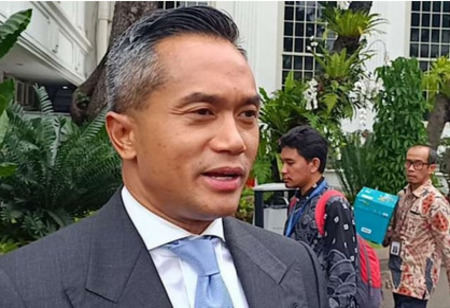
Anindya Novyan Bakrie, the chairman of the Indonesian Chamber of Commerce and Industry, is outlining the relationship between Korea and Indonesia as a crucial safeguard for Korea's energy and essential minerals security in light of increasing geopolitical uncertainties and turbulence in the energy market.
Bakrie, who accompanied Indonesian President Prabowo Subianto during his recent trip to Seoul, observed that the summit between the two countries emphasized the necessity of transitioning from temporary agreements to enduring industrial collaborations.
Also Read: Malaysia's Palm Oil Sector in Advantageous Position
“From a business point of view, the real value of this summit is that the agenda is practical … It covers trade, investment, defense, artificial intelligence (AI), infrastructure, shipbuilding, nuclear energy and energy transition,” he says. “That gives the private sector a clearer signal on where the partnership is heading.”
Amidst the Iran conflict and heightened concerns surrounding the stability of energy and resource supply chains in the Middle East, the chairman emphasized the significance of gas and other upstream energy collaborations as crucial components of Korea's supply security.
“In the near term, Indonesia’s most immediate contribution lies in gas and broader upstream energy cooperation,” he says. He cited Indonesia’s offshore Binaiya and Serpang blocks, estimated to hold 15 trillion cubic feet of gas, where SK Earthon’s consortium was granted exploration rights, as the kind of project Korea needs more of.
He stressed that the strategic value of the relationship goes well beyond hydrocarbons. “The key resources are not only fuel. They are also critical minerals and intermediate materials,” he said.
“My view is that the right model is not spot buying, but a long-term partnership: upstream cooperation, processing, logistics and a cleaner downstream industry. That is how both countries reduce dependence on any single route, market or geopolitical flashpoint.
Also Read: Dubai Chambers, Indian Ambassador Talk to Bolster Trade Ties
The chairman analyzed the recent summit between the two nations' leaders as indicative of a broader transformation in their relationship, highlighting ongoing cooperation and a well-established economic foundation.
He pointed out that the two nations have been involved in high-level discussions and negotiations to enhance investment opportunities and address business challenges ever since the heads of state convened at the Asia-Pacific Economic Cooperation gatherings in Korea in October of last year.
“The biggest synergy is clear enough: Korea brings technology, industrial discipline and capital; Indonesia brings scale, resources and a strong downstreaming agenda,” Bakrie says. “If this summit helps remove execution bottlenecks, the gains should show up in electric vehicles (EVs), batteries, steel, petrochemicals, clean energy and the digital industry.”
"Nevertheless, even with a significant foundation in place, including bilateral trade surpassing $20 billion and a multitude of Korean companies active in Indonesia, Bakrie emphasized the importance of effective implementation moving forward, fully leveraging the benefits of the Indonesia-Korea Comprehensive Economic Partnership Agreement (IK-CEPA)".
Also Read: Microsoft to Invest $10 Billion in Japan for AI, Cyber Defense
“What we would like to see now is more production, more supplier development, more skills transfer and more use of Indonesia as a manufacturing base for ASEAN, not only as a sales market,” he says.
He emphasized the importance of transforming established frameworks into tangible projects within various sectors such as semiconductors, electric vehicles (EVs), technology, infrastructure, and manufacturing. Additionally, he urged for prompt approval of collaborative proposals, highlighting that only a small fraction of proposals under IK-CEPA have been approved thus far in 2026.
“Korea brings serious strength in semiconductors, digital infrastructure and factory automation; Indonesia brings scale, demand, and a large set of real-economy use cases,” he says. “Korea’s technological strength can work with that scale to create a new growth engine. Indonesia should be one of the main platforms for that cooperation.”