


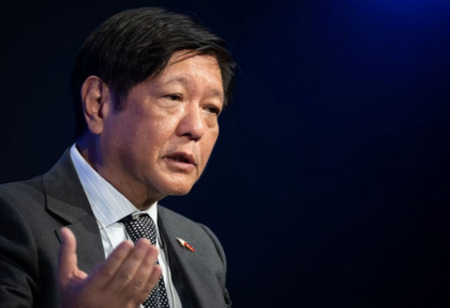
President Ferdinand Marcos Jnr. of the Philippines has mentioned that the grounding of planes may become a probable course of action due to the inadequate supply of jet fuel, which has been attributed to the conflict in Iran.
“Several countries have already told our airlines they cannot fuel their aircraft, so they have to carry fuel there and back,” Marcos says. “Long haul is going to be a much more serious problem”.
Also Read: PM Demands Swift Removal of Hurdles in Key Railway Projects
Airlines in the Asian region are strategically preparing contingency strategies in response to the escalating conflict in the Middle East, which could potentially lead to the most severe oil crisis since the 1970s.
Due to its heavy dependence on imported crude oil, much of which is sourced from the Middle East, the Philippines faces a higher level of vulnerability compared to other countries in Southeast Asia in terms of energy shortages and increasing domestic fuel costs.
Philippine low-cost carrier Cebu Air announced its intention to decrease flight frequencies starting next month due to the sharp rise in fuel prices resulting from the crisis in the Middle East, as indicated in a formal statement.
In other parts of Asia, Vietnam Airlines is implementing temporary flight suspensions on certain domestic routes, while VietJet Aviation is decreasing the frequency of its flights. Bamboo Airways, another airline based in Vietnam, has announced its intention to uphold flight operations during peak travel seasons, but has cautioned that services may be more limited compared to the previous year if oil prices remain elevated.
Also Read: SK Group Chairman Says Wafer Shortage to Last Until 2030
Marcos' remarks seem to contradict a briefing provided by Energy Secretary Sharon Garin earlier in the day. Garin stated that the Department of Energy had engaged in discussions with airlines the day before, during which the airlines assured the agency of an adequate supply of fuel orders.
“We met them because we wanted to know if they need help in procuring, but they have assured us they’re OK,” Garin says.
Garin informed journalists that due to the escalating prices of LNG, the nation will need to rely more on coal-fired power plants in the interim to maintain low electricity costs. The country consisting of 116 million islands, known for having relatively high energy expenses in the area, depends on coal for approximately 60 percent of its power production.
“We talked to the generation companies, the coal-powered plants, to check how much they can increase their generation,” Garin said, calling it a “temporary measure” that could start as early as April 1.
Also Read: South Korea Holds Early Talks With Anthropic to Expand AI Ties
Despite aiming to optimize the utilization of domestic coal resources, the Philippines is considering the possibility of increasing its procurement of coal from its main supplier, Indonesia, according to Garin. Meanwhile, Indonesia has given its assurance to the Philippines that there will be no restrictions placed on the ordering of coal.
“There’s no restriction on our importation of coal from Indonesia as of today,” Garin says, adding increased purchases may not be necessary.