


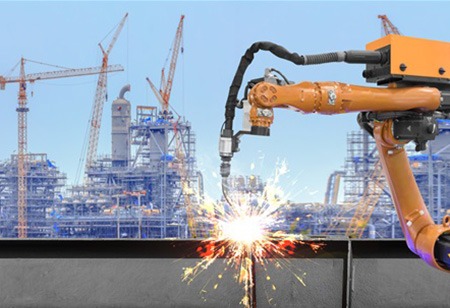
SoftBank Group has invested $200 million in Gravis Robotics, a Zurich-based construction robotics and physical AI startup, highlighting growing investor interest in autonomous machinery, industrial automation and AI-powered construction technology.
The investment comes as industries seek solutions to labour shortages, productivity pressures and workplace safety. Reports suggest the funding could value Gravis at around $1 billion, although the company has not publicly confirmed its valuation.
Key Highlights
- SoftBank invests $200 million in Gravis Robotics expansion
- Funding strengthens autonomous construction equipment and physical AI
- Investment targets labour shortages and construction productivity
The investment adds Gravis to SoftBank’s wider portfolio of artificial intelligence and robotics companies focused on bringing AI into the physical world. SoftBank has increasingly identified physical AI as an important investment area, with its portfolio covering robotics, autonomous systems and intelligent infrastructure.
Also Read: LG Innotek and TDK Join Hands on Robot Sensing
Masayoshi Son, founder and CEO of SoftBank has highlighted the potential of combining advanced AI with robotics to transform physically demanding industries. In his 2026 CEO message, Masayoshi said that when AI connects with robots, it can become “physical ASI,” allowing machines to work and act more independently in the real world. He identified construction, manufacturing and agriculture among sectors that could benefit from intelligent robots.
For SoftBank, the Gravis investment provides exposure to the emerging autonomous construction and industrial robotics market, where AI is increasingly being integrated into heavy machinery.
Also Read: Robots & Automation — The Future
Construction sites are more complex than controlled industrial environments. Uneven terrain, moving workers, changing materials and unpredictable project conditions create challenges for autonomous technology.
Gravis focuses on systems that can be integrated with existing heavy construction equipment instead of requiring contractors to purchase entirely new autonomous machines. This approach could help companies introduce construction automation gradually while continuing to use their existing machinery fleets.
The company’s technology combines AI, sensors, computer vision and autonomous control to help heavy equipment perform specific construction tasks with reduced direct human intervention.
Gravis has deployed its technology across multiple regions and says its systems can improve jobsite productivity by as much as 30%, although results depend on the project and operating environment.
Gravis CEO Dr. Ryan Luke Johns previously said, “The fastest path to autonomy is delivering productivity today.” He explained that giving operators real-time 3D intelligence while allowing them to move between autonomous and augmented control can support adoption and generate data for further development.
The latest investment is expected to support technology development, hiring, international expansion and commercial deployment. Gravis previously raised $23 million in 2025, led by IQ Capital and Zacua Ventures, to expand across the UK, US and European markets.
The new funding arrives as AI-driven construction technology attracts increasing attention from investors looking beyond traditional software applications. Autonomous equipment could help construction companies address operator shortages while improving equipment utilisation, productivity and safety.
The investment reflects the wider shift toward physical AI, robotics funding, autonomous machinery and construction technology. With SoftBank’s backing, Gravis can accelerate commercial adoption and expand its role in the growing autonomous construction equipment market.