


South Korea has announced a bold advanced technology development plan, “Seven Major SEED,” which encompasses seven essential sectors: nuclear energy, nuclear fusion, renewable energy, quantum advancements, space and aviation, biotechnology, and vital minerals and materials.
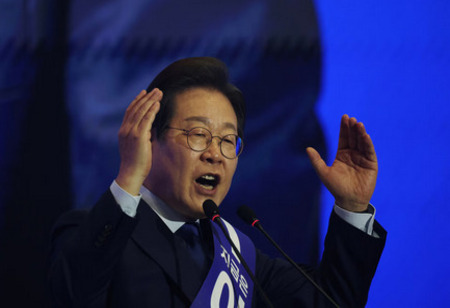
The initiative was revealed on August 12 in a gathering at the Blue House led by President Lee Jae Myung. The nation's government aims to discover additional sources of economic expansion outside of semiconductor production and artificial intelligence advancements.
The primary objectives of the strategy encompass the commercial deployment of South Korean small modular reactors by 2035, a Moon landing in 2030, the creation of a domestic 100-qubit quantum computer by 2029, and the introduction of brain-computer interface products by 2035.
Also Read: Top Leader Receives Intellectuals, Scientists in Australia
According to the technology roadmap, South Korea aims to bring its own small modular reactor to market by 2035. In the 2030s, the nation aims to start building reactors that do not utilize light-water reactor designs. The advancement of fusion energy has been recognized as an independent priority. The government plans to start producing electricity via nuclear fusion by the late 2030s.
The renewable energy initiative encompasses the creation of highly efficient solar panels, technologies for offshore wind turbines, hydrogen generation systems, and AI-controlled power networks.
South Korea aims to create a 100-qubit quantum processor featuring an error-correction system by 2029. By 2035, the nation aspires to be a worldwide leader in the production of quantum chips. The advancement of quantum technologies is regarded as a vital factor in the nation's future economic competitiveness and technological safety.
The strategy’s space element plans for the initial standalone Moon landing mission in 2030. Another lunar lander is scheduled to be launched in 2032.
By 2035, South Korea plans to create a self-sufficient low Earth orbit satellite communication system. The government intends to advance space data center technologies and back the involvement of South Korean firms in initiatives to create next-generation commercial airplanes.
Also Read: Abu Dhabi to Offer Free Entry Visa for Indian Tourists
The nation aims to create AI-bio infrastructure in the biotechnology field by 2030. It will merge the functions of artificial intelligence, biological studies, and medical advancements. South Korea anticipates the commercialization of products derived from brain-computer interfaces by 2035. The plan also encompasses backing for AI-driven drug discovery, self-operating labs, gene therapy, and cell therapy.
A separate component of the program focuses on enhancing supply chains for essential minerals and materials. The strategy includes enhancing local processing and recycling, developing strategic reserves, and broadening sources of raw materials.
Also Read: LX Semicon Supplies Automotive Semiconductor to Hyundai, Kia
By 2030, the government plans to allocate 10 trillion won, roughly $7.1 billion, towards materials, components, and equipment technologies. The updated technology strategy aims to assist South Korea in addressing decelerating potential economic growth and a decreasing working-age demographic, while reinforcing the nation’s standing in sectors crucial for the economy and national security.