


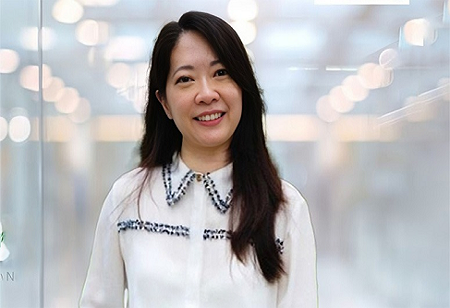
 Leadership across borders rarely follows a single formula — what works in one market, culture, or boardroom can fall flat in another. For global leader, Dee Chong, certain principles hold steady: the discipline of earning trust rather than assuming it, the balance between data and instinct, and the humility to build credibility from scratch each time the ground shifts beneath you.
Dee Chong, Managing Director at eGENTIC, has built her career across Africa, Asia-Pacific, and the Middle East, gaining firsthand experience of emerging and mature markets. From selling tyres in Africa to leading data-driven B2C growth across multiple regions, her experience across diverse markets has strengthened her ability to understand local nuances while creating strategies that deliver meaningful business growth.
In this exclusive interaction with CEOInsights Asia Magazine, Dee reflects on navigating unfamiliar markets, making informed decisions, developing future women leaders, and building a career that continues to evolve across cultures and continents.
Read the complete article for Dee Chong’s practical guide on mastering global leadership across geographies and industries.
Q1. Your journey spans continents and cultures. How has being a woman shaped your leadership lens across emerging and mature markets globally?
A. I started out selling tyres in Africa, in a room that was almost entirely men. Being a woman in that environment was not always a disadvantage. Sometimes you stand out because you are different, and that can open doors just as easily as it closes them.
There is scrutiny, yes, and you are held to a higher standard in ways that are not always fair. But there is also curiosity, and sometimes more support than you might expect. I do not think being a woman in business should always be framed as a disadvantage. Sometimes being different works in your favour, and I learned quite early to use that rather than fight it.
Q2. From Africa to Asia-Pacific, what defining moment challenged your instincts as a woman leader and reshaped your approach to growth?
A. For me, the defining challenge was never just gender. It was age. In the automotive industry, I was often the youngest person in the room, leading people who were double my age and had decades of experience I simply did not have. You cannot command that room. You have to earn it. And if you have no supporters yet, you go and find them. Walk in with honest humility and people will naturally want to help. Walk in like you own it when you clearly do not, and nobody will. I learned that credibility takes time. A title might give you authority on paper, but people decide for themselves whether they trust you to lead.
Also Read: The Foundation of Global Leadership
Q3. Your career reflects constant movement across regions and cultures. How have these transitions influenced your confidence, resilience, and identity as a global woman business leader?
A. Every time I moved, whatever I had built before stopped counting. Your reputation, your track record, your authority, none of it travels cleanly. If your confidence is built on ego, you will struggle. What I learned was to separate confidence from ego. I still believed I could do the work. I just stopped needing people to already know that. You walk in, you listen more than you speak, you ask the questions that might make you look junior, and you build from zero. There is no shame in saying "I do not know," even when you are the leader. That is not weakness. That is actually how you learn.
Q4. Navigating diverse markets, how do you balance data-driven precision with intuitive decision-making, especially in environments where women leaders are underrepresented?
A. There is sometimes a perception that women leaders allow emotion to influence decisions. I believe strongly in data because it gives me facts to work with, especially when emotions are running high. But not everything worth knowing sits in a spreadsheet. Sometimes something does not feel right, or you pick up on what someone is not saying. That matters too. I probably lean too heavily on data sometimes, but experience has taught me not to ignore instinct.
Being underrepresented has sometimes meant having to justify my decisions more, and I think that made me sharper.
Know your numbers, ask direct questions, trust your judgement, and be prepared to explain why you made the call.
Q5. Leading digital consumer acquisition across regions, how do you ensure inclusivity and representation while building strategies that resonate across vastly different cultural landscapes?
A. I hire people who know their market, full stop. People who grew up navigating it, not people who have merely studied it or passed through. That said, there are exceptions. Some people can learn a market, and when they have the right instincts and cultural intelligence, that works too. I would not have got hired for Africa otherwise.
In digital consumer acquisition especially, the difference between a strategy that converts and one that falls flat is almost always cultural nuance an outsider would never catch. My job is to create the framework and the commercial discipline. Their job is to know their people. The biggest mistake in regional expansion is parachuting in a playbook from somewhere else and refusing to question it.
Q6. Having built teams and businesses across multiple continents, how have different cultural perspectives shaped the way you mentor, empower, and develop future women leaders?
A. Most of my bosses throughout my career have been from a different nationality to me. Some communicated very differently, some managed very differently, and naturally I connected with some styles more than others. But I learned something from all of them. It taught me quite early that there is no one way to be a good leader.
When I mentor women today, I try to expose them to different perspectives rather than tell them how I would do something. You need to develop your own judgement. The biggest lessons for me have been respect and humility. I often say, “I do not agree, but I understand.” You do not have to share someone’s perspective to take the time to understand it.
Q7. As global business continues to evolve rapidly, what leadership qualities do you believe women will need most to successfully lead across cultures, industries, and generations?
A. I am not convinced women need fundamentally different leadership qualities from men. For me, adaptability matters more. If you have spent your career moving between countries, industries, and rooms where you do not obviously belong, you learn to read situations quickly. You learn how to earn trust when nobody knows you and how to lead without automatically being the obvious choice. I think there is real value in being the outsider because it forces you to observe and adapt.
As AI takes on more of the technical work, those very human skills will matter even more. Technology will keep changing, but the ability to understand people, make decisions, and lead through uncertainty will not go away.
Q8. Looking at your journey, what leadership advice would you share with women leaders
striving to build impactful, globally relevant careers today?
A. Go before you are ready. I did not have everything figured out when I moved countries, took on roles bigger than my experience, or said yes to things I had never done before. At some point you have to stop preparing and just say yes. I was also fortunate to do a master's program that was international by design, where you move, adapt, and build relationships across nationalities fast or you fall behind. It was essentially a rehearsal for the career I ended up having. Find people who will tell you the truth, not the version that keeps you comfortable. Mentors who only affirm you are not mentors, they are fans.
LAST WORD: What legacy do you hope to leave—not only through the businesses you've helped grow, but through the opportunities you've created for women aspiring to lead on the global stage?
I think it is too early in my career to talk about legacy. I still have things I want to build and prove. What I can say is that the businesses I want to be remembered for are the ones I walked into when they were stuck and left when they were not. And the people I want to be remembered by are the ones who moved forward because someone gave them a straight conversation at the right moment.
I do not see business leadership through the lens of gender, but I believe strongly in women supporting women. If legacy is simply leaving businesses and people better than you found them, I am working on it.